Better Balance in the Saddle: Exercises to Improve Rider Coordination and Body Awareness

Better Balance in the Saddle: Exercises to Improve Rider Coordination and Body Awareness
Riding isn’t just about guiding your horse—it’s equally about understanding and controlling your own body. A rider with good balance, coordination, and body awareness can communicate more clearly with the horse, creating a smoother, more harmonious partnership. Here are some exercises and ideas to help you strengthen your body control both in and out of the saddle.
Why Balance and Body Awareness Matter
Your horse mirrors your movements. A crooked or tense rider can throw the horse off balance, while a centered, supple rider helps the horse move freely and confidently. That’s why training your own body is just as important as training your horse—it’s not only about strength, but about awareness and precision.
Body awareness means knowing where your body is in space and how each part works together. When you can sense subtle shifts in weight, tension, and movement, you can respond more quickly and ride with lighter, more effective aids.
Læs også:

Off-the-Horse Exercises – Build Your Foundation
You can do a lot to improve your riding without ever putting a foot in the stirrup. Simple floor exercises can make a big difference in your balance and coordination.
- Plank and side plank – Strengthen your core muscles, which are essential for stability in the saddle. Start with short intervals and gradually increase the time.
- Single-leg balance – Stand on one leg for 30 seconds at a time. To make it harder, close your eyes or stand on a soft surface like a balance pad.
- Resistance band rotations – Use a resistance band to perform controlled torso rotations. This improves flexibility in your back and shoulders, which often get tight from riding.
- Yoga or Pilates – Both are excellent for riders because they combine strength, flexibility, and body awareness. Even short daily sessions can make a noticeable difference.
These exercises help you find and maintain your center line—the point where you’re balanced and can move freely without unnecessary tension.
In-the-Saddle Exercises – Feel the Movement
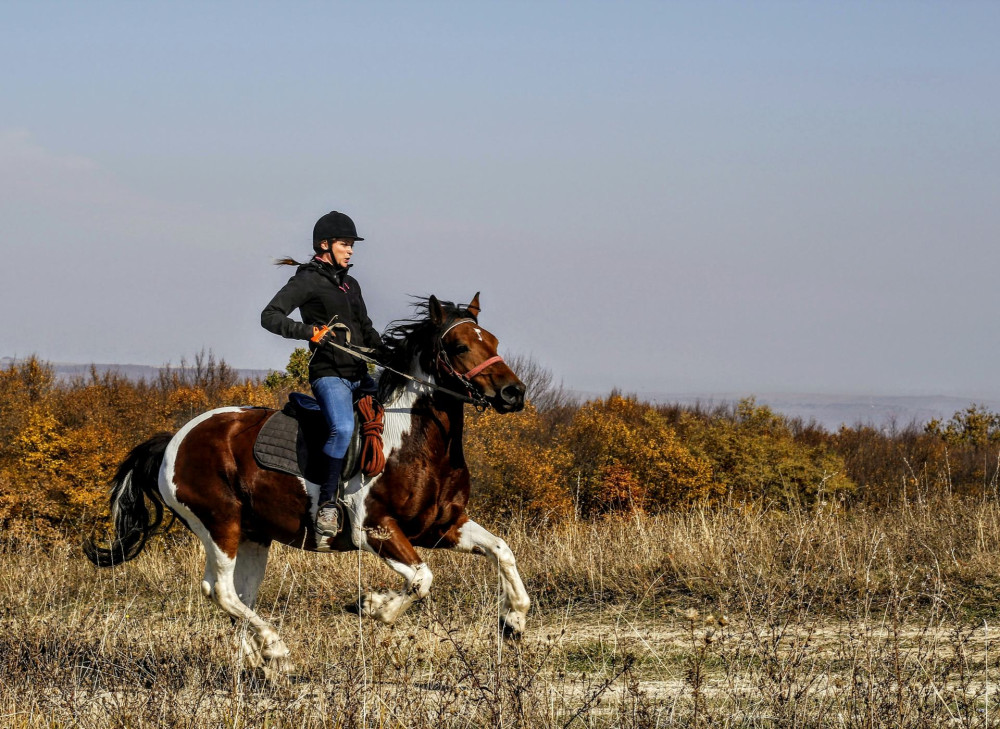
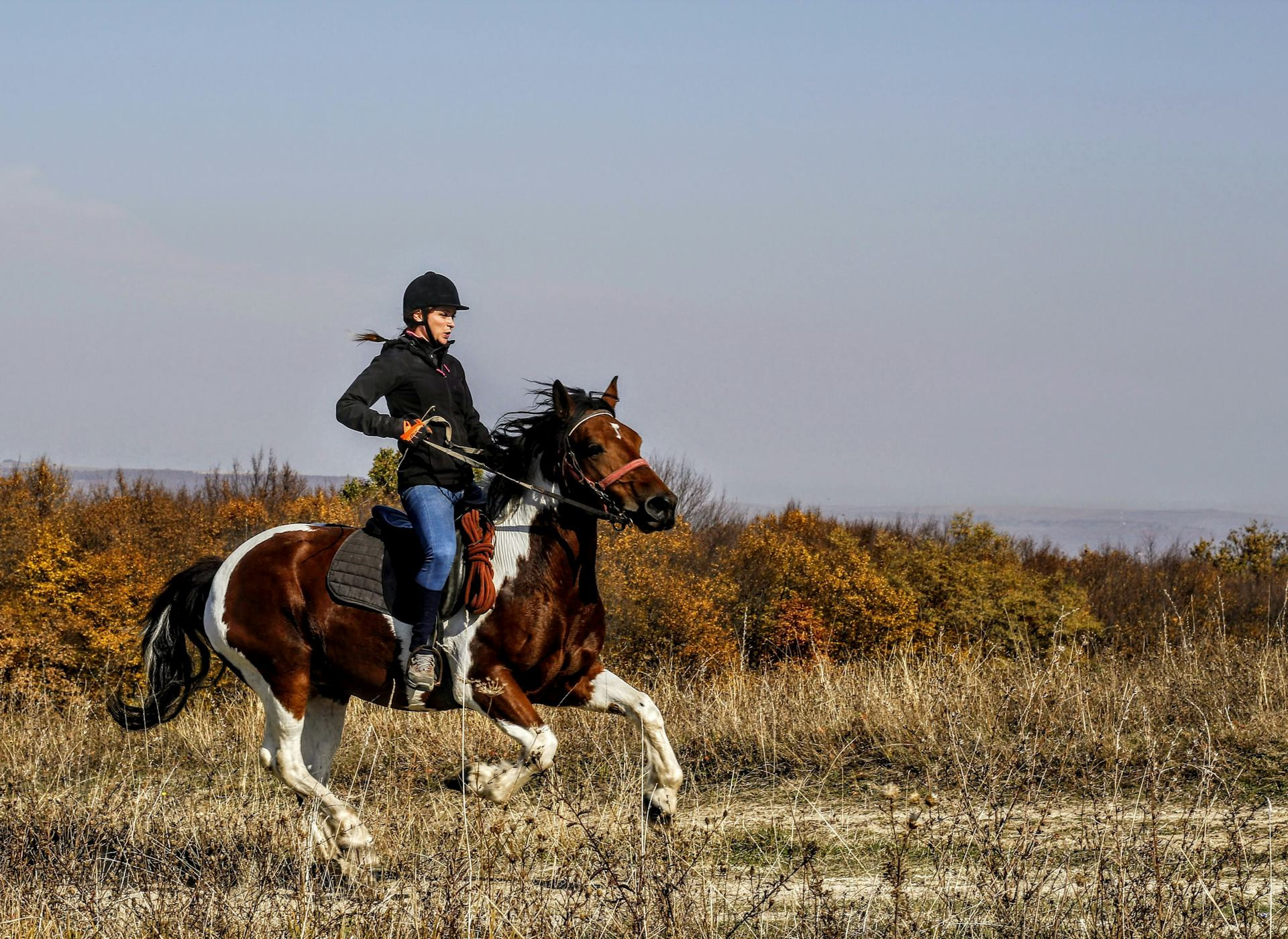
Once you’re in the saddle, the goal is to move with your horse, not against it. Try these exercises during your rides:
- Ride without stirrups – A classic but powerful exercise. It strengthens your legs and seat and helps you find your natural balance.
- Frequent transitions – Practice many small transitions, such as walk–trot–walk. This improves your timing and helps you use your seat and weight more precisely.
- Eyes closed (with supervision) – On a calm horse and in a safe environment, try closing your eyes briefly. It sharpens your sense of the horse’s movement and your own position.
- Arms out to the sides – Drop the reins for a moment and stretch your arms out. This challenges your balance and helps you feel whether you’re sitting evenly.
Incorporate these exercises into your regular riding routine. The key is to ride with awareness—not just of your horse, but of yourself.
Train Your Coordination – Small Movements, Big Results
Coordination is the ability to use different parts of your body independently yet harmoniously. For riders, that means being able to give a leg aid without tightening your hands, or turning your torso without losing balance.
Try practicing small, precise movements:
- Shift your weight slightly from side to side while keeping your upper body steady.
- Give half-halts using only your seat, without relying on the reins.
- Learn to feel when your horse lifts a particular leg and time your aids accordingly.
The better your coordination, the clearer and more consistent your communication with your horse will be.
Mental Balance – The Invisible Ingredient
Balance isn’t just physical. Your mental state plays a huge role. A tense or distracted rider passes that tension to the horse. That’s why calm focus is essential.
Before you ride, take a few deep breaths: inhale through your nose, hold briefly, and exhale slowly. This simple exercise lowers your heart rate and helps you become more present. Many riders notice that their horses immediately relax when they do.
Make It a Habit
As with any training, consistency is key. You don’t need hours every day—just 10 to 15 minutes of focused exercises can make a real difference. Combine physical training, mindful riding, and mental focus, and you’ll soon feel the improvement.
When you become more aware of your own body, you become a steadier, clearer partner for your horse. That’s what true balance in the saddle is all about—harmony between rider and horse, built on awareness, strength, and trust.
Læs også: